
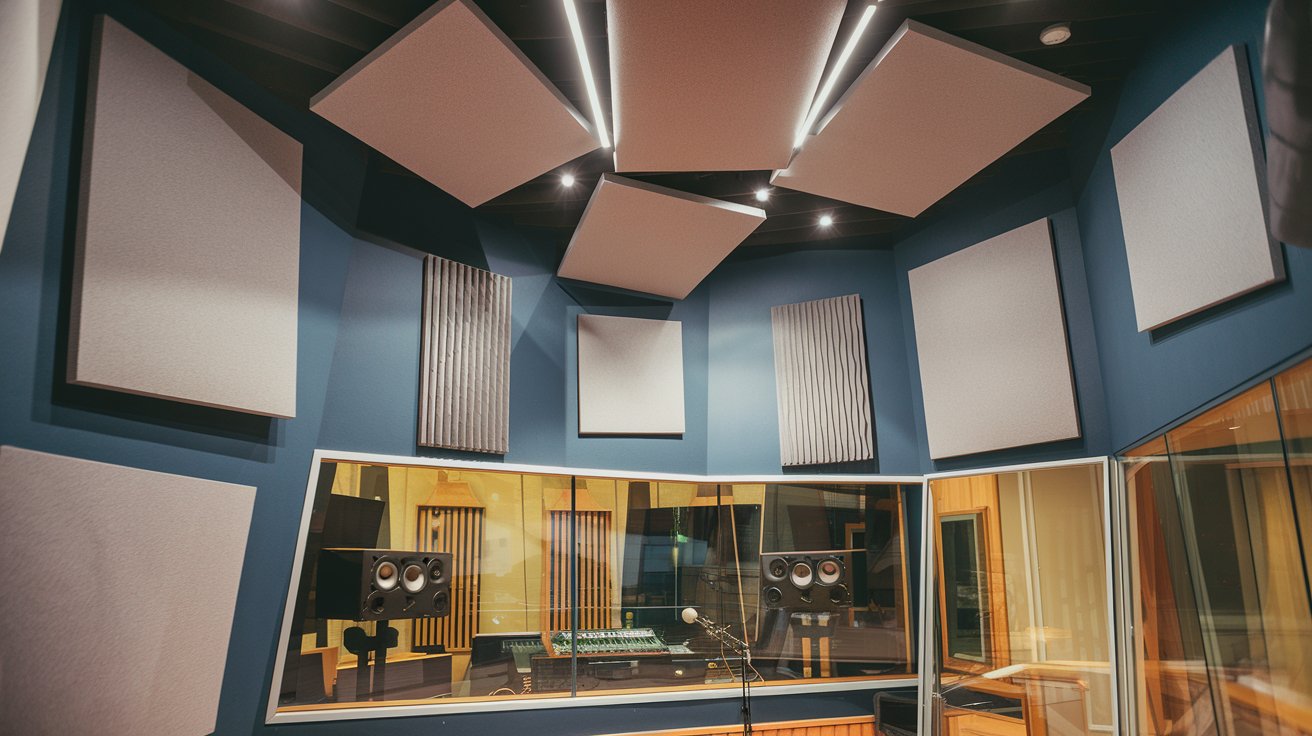
Acoustic panels work by absorbing sound waves through porous materials that convert sound energy into heat through friction. When sound waves enter the panel’s structure, they bounce between fibers or foam cells, losing energy with each collision. This process reduces echo, reverberation, and noise levels in residential and commercial spaces across the United States. Understanding the physics behind acoustic treatment helps homeowners, content creators, and business owners achieve optimal sound quality in any environment.
What Are Acoustic Panels
Acoustic panels are specialized sound treatment products designed to improve audio quality within enclosed spaces by managing sound reflections. Unlike soundproofing materials that block noise transmission between rooms, acoustic panels focus on controlling sound behavior within a single room. These panels typically consist of dense, porous materials encased in fabric coverings and mounted on walls or ceilings throughout homes, offices, recording studios, and entertainment venues.
The United States acoustic panel market reached $1.8 billion in 2025, with residential applications growing 34% as remote work and home theaters became standard. Modern acoustic panels come in various forms including fiberglass panels, foam treatments, fabric-wrapped absorbers, and decorative wood slat designs. Each type addresses specific frequency ranges and aesthetic preferences while serving the fundamental purpose of reducing unwanted sound reflections that create muddy audio environments.
The Physics of How Acoustic Panels Work
The science behind acoustic panel functionality centers on converting kinetic sound energy into minimal heat energy through a process called absorption. When sound waves strike a hard surface like drywall, approximately 95% of the energy reflects back into the room, creating echoes and reverberation. Acoustic panels interrupt this cycle by providing a porous pathway where sound waves penetrate the material rather than bouncing off immediately.
As sound waves enter the panel’s microscopic structure, air molecules vibrate against the fibers or cell walls of the material. This friction between moving air and stationary material converts sound energy into thermal energy, though the heat generated is imperceptible to human senses. The effectiveness of this conversion depends on material density, thickness, airflow resistance, and the frequency of incoming sound waves, with different panel designs optimized for various acoustic challenges.
Sound Absorption Coefficients Explained
The Noise Reduction Coefficient (NRC) measures acoustic panel effectiveness on a scale from 0.0 to 1.0, where higher numbers indicate better absorption. A panel with an NRC of 0.85 absorbs 85% of sound energy while reflecting 15% back into the room. Quality acoustic panels in 2026 typically achieve NRC ratings between 0.75 and 1.05, with values exceeding 1.0 possible when edge effects and diffusion contribute to overall performance.
Different frequencies require different treatment approaches since low-frequency sounds have longer wavelengths that penetrate deeper into materials. Standard 2-inch acoustic panels effectively absorb frequencies above 500 Hz, while bass frequencies below 250 Hz demand thicker panels or specialized bass traps with 4-6 inch depths. Understanding these coefficients helps consumers select appropriate panels for their specific acoustic problems, whether addressing vocal clarity or controlling rumbling bass in home theaters.
The Role of Air Gaps Behind Panels
Mounting acoustic panels with an air gap between the panel and wall significantly enhances low-frequency absorption by creating a resonant cavity. This spacing, typically 2-4 inches, allows sound waves to interact with both the front and back surfaces of the panel while the trapped air acts as an additional absorptive element. The air gap effectively increases the panel’s working thickness without adding material costs, improving absorption in the 125-500 Hz range by up to 40%.
Professional acousticians in the United States increasingly recommend spaced mounting systems for home offices and studios where speech intelligibility matters most. The air cavity behind panels shifts the absorption curve downward in frequency, meaning a 2-inch panel mounted with a 2-inch air gap performs similarly to a 4-inch panel mounted directly against the wall. This installation technique proves especially valuable in apartments and condos where thick panels might overwhelm smaller rooms aesthetically.
Types of Acoustic Panel Materials
Modern acoustic treatment utilizes diverse materials, each offering distinct performance characteristics, costs, and aesthetic qualities. Material selection impacts not only acoustic performance but also fire safety ratings, environmental sustainability, and installation requirements. Understanding these differences helps consumers match panel types to specific applications, whether treating a podcast studio, home theater, restaurant, or open-office environment across the United States.
Fiberglass and Mineral Wool Panels
Fiberglass acoustic panels remain the professional standard for sound absorption, offering superior performance across broad frequency ranges with NRC ratings reaching 1.05 to 1.15. These panels use tightly compressed glass fibers creating millions of tiny air pockets that trap and dissipate sound energy efficiently. High-density fiberglass panels (6-8 pounds per cubic foot) outperform lower-density alternatives, particularly for controlling problematic mid-range frequencies between 250-2000 Hz where human speech and music fundamentals reside.
Mineral wool panels, manufactured from recycled slag or natural rock, provide similar acoustic performance with enhanced fire resistance and environmental credentials. Popular brands like Roxul (now Rockwool) offer panels that withstand temperatures exceeding 2000°F while maintaining their structural integrity and acoustic properties. The United States commercial sector increasingly specifies mineral wool for restaurants, theaters, and educational facilities where fire codes demand Class A fire ratings and sustainable building certifications like LEED credits matter for project approvals.
Acoustic Foam Panels
Open-cell acoustic foam represents the most affordable entry point for acoustic treatment, with prices ranging from $1-3 per square foot compared to $4-8 for professional fiberglass panels. These lightweight polyurethane foam products feature pyramid, wedge, or eggcrate surface patterns designed to scatter and absorb high-frequency sounds above 1000 Hz. However, foam panels typically achieve NRC ratings of only 0.40-0.65, making them less effective than denser alternatives for comprehensive room treatment.
Despite limitations, acoustic foam serves specific applications excellently, particularly for controlling flutter echoes and high-frequency reflections in home recording spaces and gaming rooms. The material’s light weight enables temporary installations using spray adhesive or command strips without damaging walls, appealing to renters and students. In 2026, premium acoustic foams incorporating graphite or melamine formulations offer improved mid-frequency absorption and fire resistance, narrowing the performance gap with professional fiberglass options while maintaining cost advantages.
Fabric-Wrapped and Decorative Panels
Fabric-wrapped acoustic panels combine professional absorption performance with customizable aesthetics, allowing integration into residential and commercial interior designs. These panels feature fiberglass or mineral wool cores wrapped in acoustically transparent fabrics ranging from neutral colors to custom-printed artwork, photography, or corporate branding. The fabric covering must maintain sufficient porosity to allow sound penetration while providing visual appeal and protecting the absorbent core from damage.
Wood slat acoustic panels emerged as a major design trend in 2025-2026, offering mid-century modern aesthetics combined with acoustic functionality. These panels feature precisely spaced wood slats mounted over acoustic felt backing, with the gaps between slats allowing sound to reach the absorptive layer behind. Popular in upscale residential projects and boutique commercial spaces, wood slat systems achieve NRC ratings of 0.60-0.85 while adding architectural interest. Installation costs run higher at $15-40 per square foot, but homeowners across the United States increasingly view them as dual-purpose investments in both acoustics and interior design.
Do Acoustic Panels Really Work for Common Problems
Acoustic panels demonstrably improve sound quality within rooms by reducing reverberation time, eliminating echoes, and clarifying speech and music reproduction. Controlled studies show that treating 15-25% of wall surface area with quality acoustic panels reduces reverberation time by 40-60%, transforming harsh, echoey spaces into comfortable acoustic environments. However, effectiveness depends entirely on proper panel selection, strategic placement, and realistic expectations about what acoustic treatment can and cannot achieve in residential settings.
The confusion between acoustic treatment and soundproofing causes disappointment among consumers expecting panels to block noise from neighbors or reduce sound transmission between rooms. Acoustic panels absorb sound waves within a space but provide minimal sound blocking since their porous structure allows sound to pass through rather than reflecting it back. A typical 2-inch acoustic panel reduces sound transmission by only 2-4 decibels, essentially negligible for soundproofing purposes, though it dramatically improves audio quality within the treated room itself.
Effectiveness Against Neighbor Noise
Acoustic panels do not work for blocking noise from neighbors since their porous absorption properties contradict the mass and isolation required for effective soundproofing. Sound transmission between apartments, condos, or attached homes requires dense barriers like additional drywall layers, mass-loaded vinyl, resilient channels, or decoupled wall assemblies that prevent sound vibrations from passing through structural elements. Homeowners seeking neighbor noise reduction need soundproofing solutions, not acoustic treatment.
However, acoustic panels provide indirect benefits in multi-family situations by reducing sound reflections within your own space, preventing your activities from seeming louder than necessary to neighbors. When combined with proper soundproofing construction, interior acoustic treatment ensures that reduced sound transmission delivers maximum privacy benefits. In 2026, acoustic consultants across the United States increasingly educate clients on this distinction, recommending integrated approaches that address both sound transmission (soundproofing) and sound quality (acoustic treatment) for comprehensive noise control solutions.
Performance in Home Studios and Offices
Home recording studios and offices represent ideal applications for acoustic panels, where controlling reflections and reverberation directly impacts productivity and output quality. Treating 20-30% of surface area in these spaces eliminates the boxy, echo-laden sound quality that plagues untreated rooms, resulting in clearer video conference audio, more accurate music production monitoring, and reduced listener fatigue during extended work sessions. Professional podcasters and content creators report dramatic improvements in audio quality after implementing strategic acoustic treatment.
Speech intelligibility improvements prove particularly valuable in home offices where video conferencing has become standard professional practice. Acoustic panels reduce the reflected sound that causes hollow, echoing audio on platforms like Zoom, Microsoft Teams, and Google Meet, helping remote workers project professional images during client meetings and presentations. Studies from the Acoustical Society of America indicate that proper room treatment can improve speech intelligibility scores by 25-40%, reducing miscommunication and meeting fatigue that cost United States businesses an estimated $62 billion annually in lost productivity.
Strategic Placement for Maximum Effectiveness
Acoustic panel placement follows specific principles based on sound reflection patterns and room geometry rather than random wall coverage. The most critical treatment locations are first reflection points where sound from speakers or sound sources bounces off walls before reaching listeners’ ears, creating comb filtering and imaging problems. Additional priority areas include parallel wall surfaces that create flutter echoes and corners where low-frequency energy accumulates, requiring specialized bass trap treatment for comprehensive acoustic control.
Professional acoustic analysis using measurement microphones and software like Room EQ Wizard helps identify problematic reflection points and frequency buildups, but homeowners can achieve excellent results using simple geometric principles. The mirror trick effectively locates first reflection points: sit in the primary listening position while a helper moves a mirror along walls until you see the speaker reflected, marking that location for panel placement. Treating ceiling reflection points proves equally important for home theaters and studios, though many residential projects neglect overhead surfaces despite their significant contribution to overall room acoustics.
Behind TV and Speaker Placement
Placing acoustic panels behind wall-mounted TVs creates acoustic benefits by controlling reflections from the hard wall surface directly behind speakers. Modern soundbars and TV speakers project audio forward, but significant sound energy also radiates backward, reflecting off the wall and creating comb filtering that muddies dialogue clarity. A 2-inch acoustic panel mounted on the wall behind the TV absorbs these reflections, resulting in clearer dialogue and improved sound staging without interfering with TV mounting or cable management.
However, this placement strategy works only when panels are positioned on the wall behind the TV, not between the TV and wall, which would create mounting difficulties and air circulation concerns. Many homeowners in the United States integrate acoustic treatment into TV wall designs using fabric-wrapped panels that complement entertainment center aesthetics while providing functional acoustic benefits. Custom-printed acoustic panels featuring artwork or photography transform functional acoustic treatment into decorative focal points, addressing both performance and interior design objectives in modern living spaces.
Corner Bass Trap Installation
Bass traps installed in room corners address low-frequency energy accumulation that standard wall panels cannot control effectively. Sound waves below 250 Hz have wavelengths measuring 4-10 feet, causing them to build up in corners where walls meet each other and the ceiling. These modal resonances create boomy, uneven bass response that colors music and movie soundtracks, making some notes disproportionately loud while others disappear entirely depending on listener position.
Tri-corner bass traps, designed to fit into three-way corner junctions where two walls meet the ceiling, provide maximum low-frequency absorption in minimal space. These specialized absorbers typically feature 6-8 inch thick mineral wool or fiberglass cores, offering effective absorption down to 80-100 Hz depending on construction details. Installing bass traps in all four ceiling corners of a home theater or listening room addresses the most problematic modal frequencies, creating more even bass response and improved clarity across the entire audio spectrum. Professional acousticians recommend allocating 30-40% of acoustic treatment budgets specifically to bass absorption since low-frequency control proves more challenging and impactful than mid and high-frequency treatment.
Acoustic Panels vs Soundproofing Materials
The fundamental difference between acoustic treatment and soundproofing lies in their opposite operational principles and intended outcomes. Acoustic panels use porous, lightweight materials designed to absorb sound energy within a room, improving internal sound quality by reducing reflections and reverberation. Soundproofing employs dense, heavy materials and isolation techniques designed to block sound transmission between spaces, preventing noise from traveling through walls, floors, and ceilings to adjacent rooms or neighboring properties.
This distinction causes significant confusion among United States consumers seeking noise solutions, with many purchasing acoustic foam panels expecting soundproofing results, then experiencing disappointment when neighbor noise remains audible. Effective soundproofing requires adding mass to structures using materials like additional drywall layers, mass-loaded vinyl barriers, or concrete, combined with isolation techniques such as resilient channels, staggered stud walls, or floating floors that prevent sound vibrations from transferring through building structures. Acoustic treatment costs $200-800 for typical residential rooms, while comprehensive soundproofing construction runs $2,000-10,000 depending on project scope and existing construction quality.
When to Choose Acoustic Treatment
Choose acoustic panel solutions when problems involve sound quality within a single room rather than sound transmission between spaces. Typical scenarios include echo and reverberation in large rooms with hard surfaces, unclear dialogue in home theaters, hollow-sounding audio in video conferences, inaccurate monitoring in music production spaces, and excessive noise levels in restaurants or office environments. These problems stem from sound reflecting repeatedly off hard surfaces, and acoustic absorption effectively eliminates the issue at its source.
Acoustic treatment also benefits recording environments where capturing clean audio matters more than blocking external noise. Podcasters, YouTubers, and musicians need to control room reflections that color their recordings, making voices sound boxy or causing microphones to pick up confusing reflections alongside direct sound. In these applications, spending $300-600 on strategic acoustic panel placement delivers far better results than investing thousands in soundproofing construction, since the goal involves improving recorded sound quality rather than achieving isolation from neighbors or street noise.
When Soundproofing Is Necessary
Invest in proper soundproofing construction when noise travels between rooms, apartments, or from external sources like traffic and neighbors. Common soundproofing scenarios include blocking noise from adjacent apartments in multi-family buildings, isolating home theaters to prevent disturbing family members, creating quiet home offices in noisy households, and reducing traffic noise penetrating through windows and exterior walls. These challenges require preventing sound energy from physically traveling through structures rather than absorbing it within rooms.
Effective soundproofing combines multiple strategies including adding mass, creating isolation, and sealing air gaps where sound leaks through. A comprehensive approach might include installing additional drywall layers with Green Glue damping compound, using resilient channels to decouple walls from studs, adding mass-loaded vinyl barriers, and sealing all electrical outlets, door frames, and other penetrations with acoustic caulk. The United States residential soundproofing market grew 28% in 2025 as remote work normalized and homeowners sought peaceful environments, with combined acoustic treatment and soundproofing projects delivering optimal results for discerning clients.
Benefits Beyond Noise Reduction
While controlling reverberation and echo represents the primary function, acoustic panels deliver multiple benefits that enhance comfort, productivity, and property value. Improved speech intelligibility reduces communication errors and meeting fatigue in offices, while better sound clarity enhances entertainment experiences in home theaters. Aesthetic improvements through decorative panel options allow homeowners to address acoustic issues without compromising interior design, and some acoustic treatments even provide minor thermal insulation benefits by adding material layers to walls and ceilings.
The psychological impact of proper acoustic environments proves equally significant, with studies showing that excessive reverberation increases stress levels and reduces concentration. The Environmental Protection Agency identifies noise as a significant environmental stressor, with poor acoustic environments contributing to elevated cortisol levels, reduced productivity, and decreased well-being. Treating home offices, bedrooms, and living spaces with appropriate acoustic panels creates calmer, more comfortable environments that support better sleep, improved focus, and enhanced quality of life throughout residential properties across the United States.
Improved Speech Intelligibility
Speech intelligibility improvements represent perhaps the most valuable acoustic panel benefit for everyday residential and commercial applications. Excessive reverberation causes speech sounds to blur together as reflected words overlap with directly heard words, forcing listeners to work harder to understand conversations. This phenomenon proves particularly problematic for individuals with hearing impairments, non-native speakers, and elderly populations who experience greater difficulty processing speech in reverberant environments.
Acoustic treatment that reduces reverberation time from 1.2 seconds to 0.5 seconds can improve speech intelligibility scores by 30-45% according to research from the Acoustical Society of America. These improvements translate to fewer repeated phrases in conversations, reduced meeting fatigue during extended video conferences, and better comprehension in educational settings. Restaurants installing acoustic panels report customer satisfaction increases of 15-20% as diners enjoy conversations without shouting over ambient noise, while open-office environments show productivity gains of 12-18% when acoustic treatment controls the cacophony of simultaneous conversations that plague modern collaborative workspaces.
Enhanced Entertainment Experiences
Home theater and music listening experiences improve dramatically with proper acoustic treatment controlling reflections that otherwise muddy soundtracks and collapse stereo imaging. Untreated rooms create numerous reflections arriving at listening positions within milliseconds of direct sound, causing comb filtering that emphasizes some frequencies while canceling others. This results in uneven, colored sound that prevents accurate reproduction of recorded content, wasting investments in quality speakers and AV equipment.
Strategic acoustic panel placement creates a more controlled listening environment where direct sound dominates over reflections, allowing listeners to hear recordings as producers and mixing engineers intended. Improvements include tighter, more articulate bass response; clearer dialogue without excessive brightness; wider, more precise stereo imaging; and better front-to-back depth in surround sound systems. Audiophile communities across the United States consistently rate acoustic treatment as providing better sound quality improvements per dollar spent than equipment upgrades, with proper room treatment allowing modestly priced speakers to outperform expensive models struggling in poor acoustic environments.
Installation Methods and DIY Options
Acoustic panel installation accommodates various skill levels and permanence requirements, from temporary solutions using removable adhesives to professional installations with French cleats and Z-clips. Rental-friendly options include using 3M Command strips rated for appropriate panel weights, acoustic panel standoffs that create air gaps without wall penetration, or freestanding acoustic screens that require no mounting whatsoever. Permanent installations offer cleaner aesthetics and better stability, using impaling clips embedded in panels that mount on corresponding wall clips, or traditional Z-clip systems common in commercial environments.
DIY acoustic panel construction saves 50-70% compared to purchasing commercial products, though requires basic tools and materials including rigid fiberglass or mineral wool insulation, wood frames, and acoustically transparent fabric. A standard 2’x4′ panel costs $15-25 in materials versus $60-120 for equivalent commercial options, making DIY approaches attractive for budget-conscious homeowners treating larger spaces. However, commercial panels offer advantages including professional appearance, tested fire ratings, and warranties that matter for commercial installations. The United States DIY acoustic treatment market expanded significantly during 2024-2026 as YouTube tutorials and online communities shared construction techniques and material sources.
Common Mistakes to Avoid
The most frequent acoustic treatment error involves insufficient panel coverage, with homeowners installing 4-6 panels expecting transformative results that require 12-20 panels for adequate treatment. Acoustic improvement correlates directly with the percentage of surface area treated, with noticeable improvements beginning around 15% coverage and optimal results achieved at 25-35% coverage. Treating only one wall while leaving other surfaces untreated proves largely ineffective since sound reflects freely off untreated surfaces, maintaining reverberation problems despite partial treatment efforts.
Another critical mistake involves neglecting low-frequency treatment entirely, focusing exclusively on mid and high-frequency absorption using thin panels or foam. Bass frequencies require substantially thicker absorption or corner placement to control effectively, with many projects treating mid and high frequencies successfully while bass problems remain unaddressed. This imbalanced approach creates thin, lifeless sound lacking warmth and weight, sometimes worse than untreated spaces. Professional acoustic consultants recommend allocating 30-40% of panel quantities specifically to 4-6 inch bass traps in corners, ensuring balanced absorption across the frequency spectrum that creates natural, comfortable acoustic environments throughout residential and commercial spaces.
Related video about how do acoustic panels work
This video complements the article information with a practical visual demonstration.
Everything you need to know about how do acoustic panels work
Do acoustic panels really work for improving sound quality?
Yes, acoustic panels demonstrably work for improving sound quality within rooms by absorbing reflections and reducing reverberation time. Quality panels with NRC ratings above 0.80 absorb 80%+ of sound energy, eliminating echoes and clarifying speech and music. However, they require proper placement covering 15-25% of wall surface area and realistic expectations, as panels treat sound within rooms but do not block noise transmission between spaces. Professional installations in home theaters, studios, and offices consistently achieve 40-60% reverberation reduction, transforming harsh acoustic environments into comfortable listening spaces.
What are the disadvantages of acoustic wall panels?
Acoustic panels have several limitations including cost ($4-12 per square foot professionally), visual impact consuming wall space, and inability to block sound transmission for soundproofing purposes. They prove ineffective against neighbor noise or sound traveling between rooms since porous materials absorb rather than block sound. Additional disadvantages include dust accumulation on fabric surfaces requiring occasional cleaning, potential fire hazards with low-quality foam products, and installation permanence concerns for renters. Panels also address only acoustic reflections, not structural sound transmission issues requiring construction solutions like additional drywall layers or isolation techniques.
Is it a good idea to put acoustic panels behind TV?
Yes, placing acoustic panels on the wall behind wall-mounted TVs improves dialogue clarity by absorbing sound reflections from the hard surface behind speakers. Modern soundbars and TV speakers project audio backward as well as forward, and these reflections create comb filtering that muddies speech intelligibility. A 2-inch panel mounted on the wall behind the TV (not between the TV and wall) effectively controls these reflections without interfering with mounting or ventilation. This placement strategy works particularly well when integrated into entertainment center designs using fabric-wrapped panels that complement room aesthetics while providing functional acoustic benefits.
Do acoustic panels stop noise from neighbours?
No, acoustic panels do not stop noise from neighbors since they absorb sound within rooms rather than blocking sound transmission through walls. Their porous structure allows sound to pass through rather than reflecting it back, providing only 2-4 decibel reduction in sound transmission, which is negligible for soundproofing purposes. Blocking neighbor noise requires proper soundproofing with dense materials like additional drywall, mass-loaded vinyl, or isolation techniques such as resilient channels and decoupled walls. However, acoustic panels reduce sound reflections within your space, potentially making your activities seem quieter to neighbors by preventing sound from bouncing around and escaping through walls at elevated levels.
How much wall coverage do acoustic panels need?
Effective acoustic treatment requires covering 15-25% of total wall surface area, with optimal results achieved at 25-35% coverage including ceiling treatments. A 12’x14′ room (168 square feet of wall space) needs approximately 25-40 square feet of panel coverage, translating to 12-20 standard 2’x4′ panels depending on acoustic goals and existing furnishings. Insufficient coverage proves the most common treatment mistake, with 4-6 panels providing minimal improvement while 15-20 panels deliver transformative results. Professional acousticians recommend treating first reflection points, parallel walls prone to flutter echo, and corners for bass control, prioritizing strategic placement over random wall coverage to maximize effectiveness.
Can acoustic panels work in apartments without damaging walls?
Yes, acoustic panels work effectively in apartments using rental-friendly installation methods that avoid wall damage. Options include 3M Command strips rated for panel weights, acoustic panel stands requiring no mounting, adhesive standoffs creating air gaps without penetration, and tension rod systems for lightweight foam panels. These temporary solutions allow renters to enjoy acoustic treatment benefits without losing security deposits, though permanent installations using impaling clips or Z-clips provide superior stability and aesthetics for owned properties. The key involves selecting appropriate mounting hardware for panel weights and wall surfaces, with weight limits clearly specified by adhesive manufacturers to prevent panels falling and causing damage.
| Panel Aspect | Key Details | Primary Benefit |
|---|---|---|
| Absorption Mechanism | Converts sound to heat through friction in porous materials | Reduces reflections and reverberation within rooms |
| NRC Rating | 0.75-1.05 for quality panels measuring absorption effectiveness | Quantifies performance for informed purchasing decisions |
| Coverage Area | 15-25% of surface area minimum, 25-35% optimal | Ensures noticeable acoustic improvements in treated spaces |
| Material Types | Fiberglass, mineral wool, foam, fabric-wrapped, wood slat | Options matching acoustic needs, budgets, and aesthetics |
| Bass Treatment | 4-6 inch thick panels or corner bass traps required | Controls low-frequency buildup for balanced sound |
| Installation Cost | $200-800 typical room, DIY saves 50-70% | Affordable improvement compared to equipment upgrades |

